© 2026 All right reserved
WATERWAYS
❒ 68 PHOTOS ⚲ THAILAND
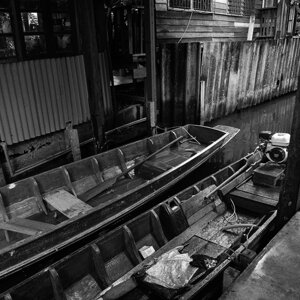
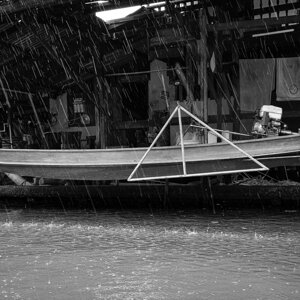
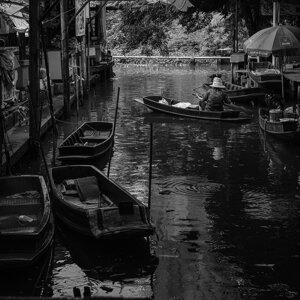
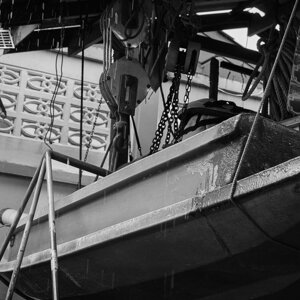
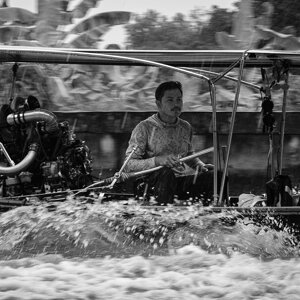
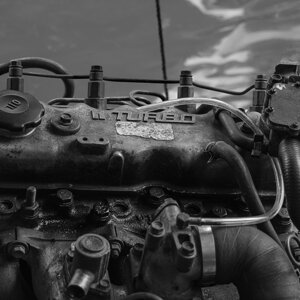
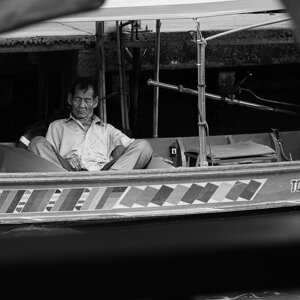
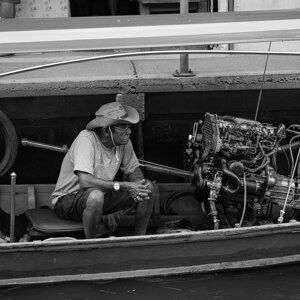
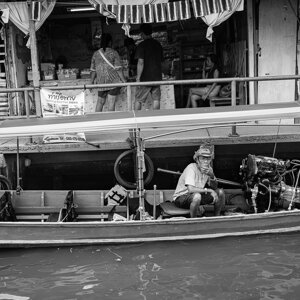
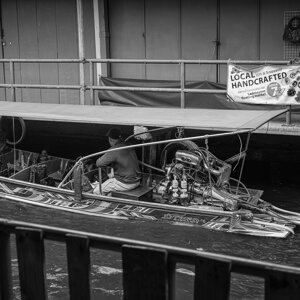
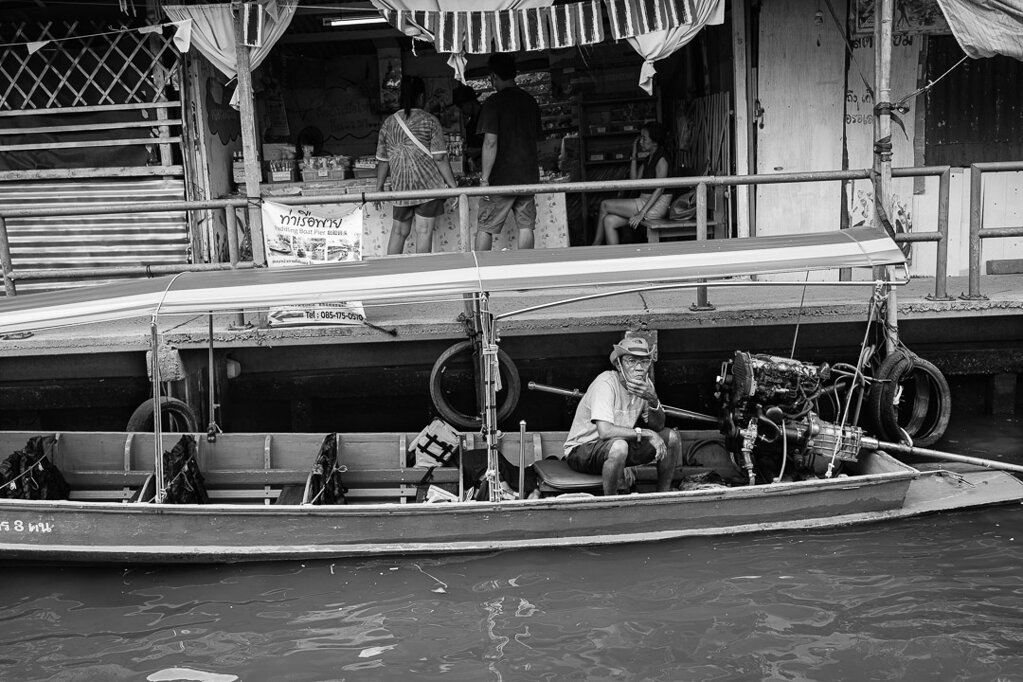
Taling Chan is one of Bangkok’s western districts where the metropolis's liquid geography was never fully erased by concrete. Here, along the branches of Khlong Lat Mayom, the canal network continues to function as a true aquatic street grid: a living, self-sufficient infrastructure surviving in the shadow of the mainland's massive elevated interchanges and high-rises. In this section of the amphibious city, long-tail boats, traditional sleek vessels powered by automotive engines mounted on long driveshafts cantilevered over the stern, replace cars, cruising at low speeds through a lattice of waterways connecting micro-communities that seem impervious to the frenzy of the urban center.
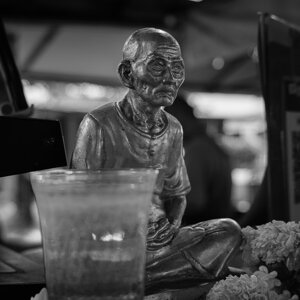
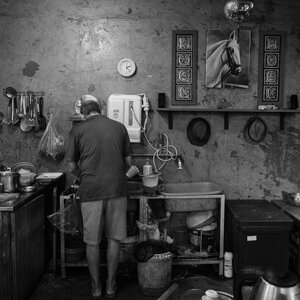
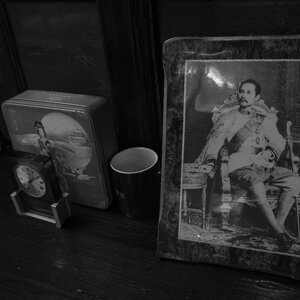
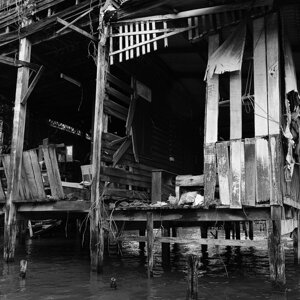
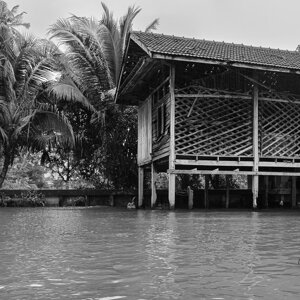
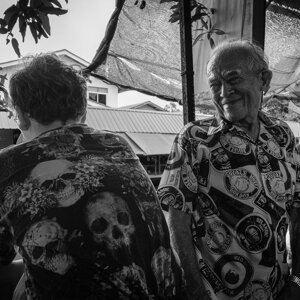
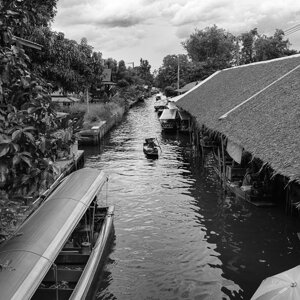
Entering the canal reveals a spatial dynamic dominated by an apparent stillness that actually conceals a dense tapestry of daily life. The banks are defined by wooden stilt architecture, where supporting posts sink into the silt of the canal bed and private docks serve as primary access sidewalks. The aesthetic of these homes is marked by a spontaneous layering of materials: the porosity of wood weathered by tropical humidity coexists with eclectic decor accumulated over time. On covered porches, just inches above the water's surface, old appliances, plastic-cased CRT televisions, and various vintage objects are not preserved as display pieces, but integrated into the domestic routine or used as decorative accents.
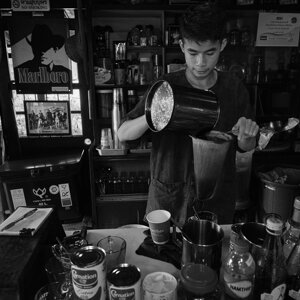
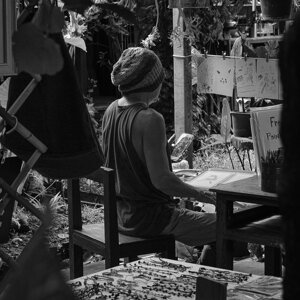
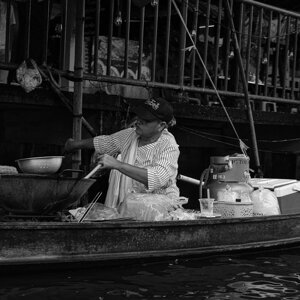
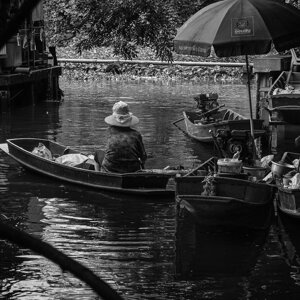
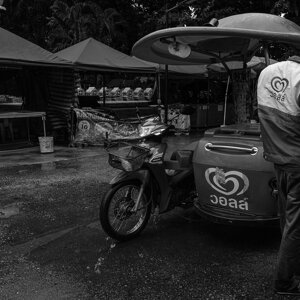
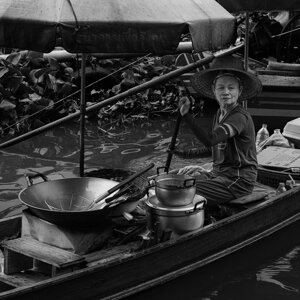
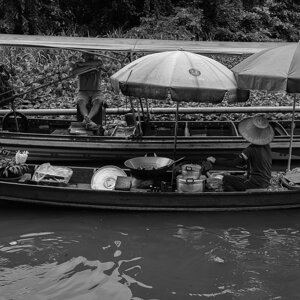
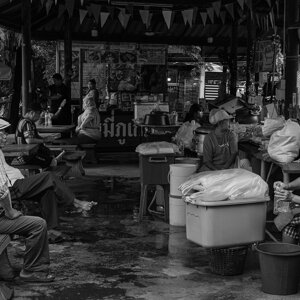
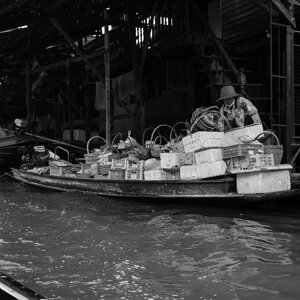
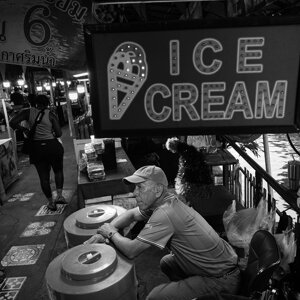
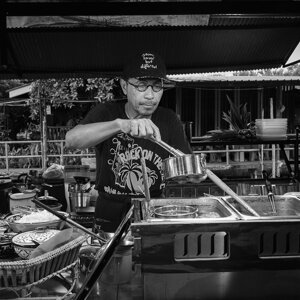
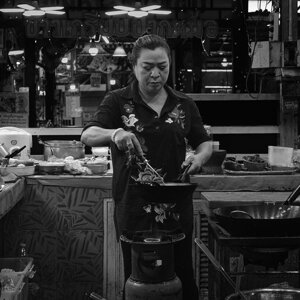
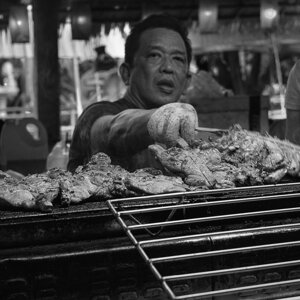
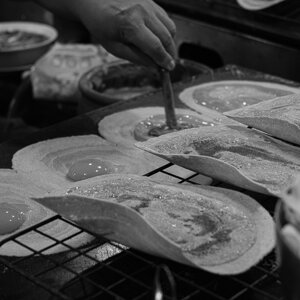
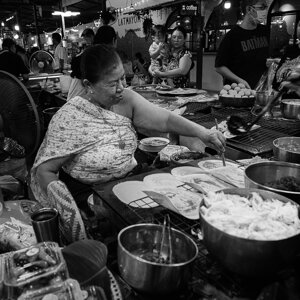
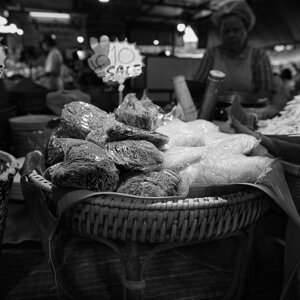
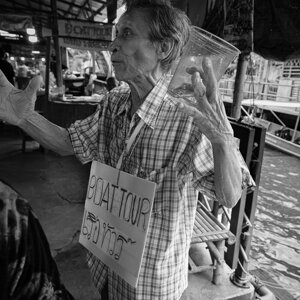
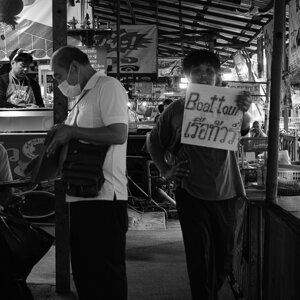
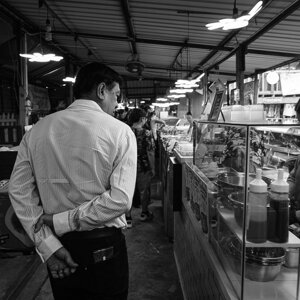
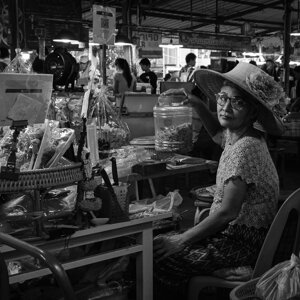
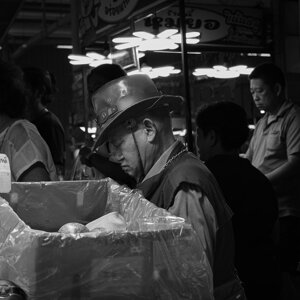
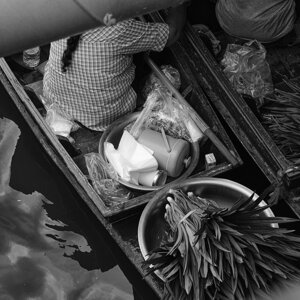
Along the edges of Khlong Lat Mayom, floating commerce seamlessly merges with the residential realm. Small cafes, micro-roasteries, food stalls, and artisan shops occupy floating platforms, while the music of local bands and soloists blends with the low thrum of propellers and the lapping of waves against the bulkheads. At the market's center, wooden boats moored in a herringbone pattern become active working extensions of home kitchens. Within hulls barely four meters long, cooks maneuver portable charcoal stoves and gas burners, managing the thick steam of broths infused with galangal, lemongrass, and cilantro, before serving steaming bowls and rice dishes directly onto the concrete quays where trades between vendors and residents take place.
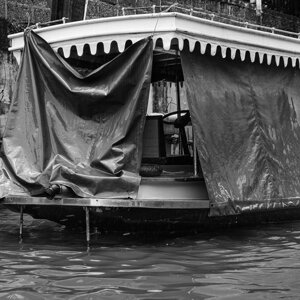
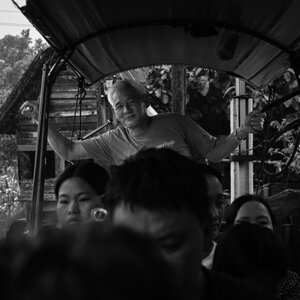
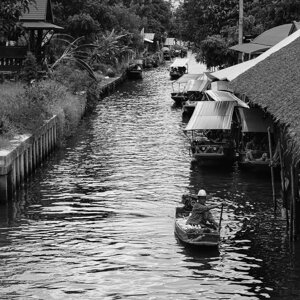
Heading deeper into the secondary branches of the canal, far from the bustling market, the passage of sleek boats thins out and the aquatic landscape settles into a rhythm of industrious calm. The waterway narrows into tight channels allowing only one or at most two boats to pass at a time, winding through entire inhabited neighborhoods. Within these minimal corridors, the purest form of everyday adaptation and ingenuity emerges. What to an outsider's eye seems an exotic exception or a complex logistical challenge is, for those living along the khlongs, the only possible normality. People's creativity does not reveal itself in grand gestures, but in the effortless grace with which every urban action has been translated from the language of asphalt to that of water. Unmooring a small boat from one's private dock to go grocery shopping is done with the same automatic ease with which someone elsewhere would strap a helmet to a scooter's handlebars. Boarding to get to school replaces waiting for the school bus at the curb; the boat is not a special mode of transport, but a prosthesis for both body and home, a natural extension of living space.
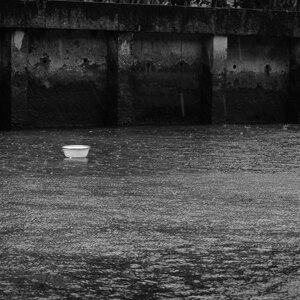
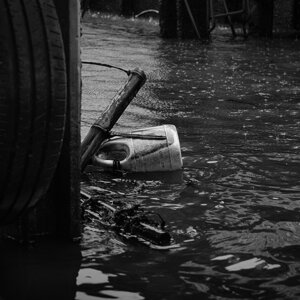
This cognitive and pragmatic flexibility has shaped a spontaneous form of urbanism where every logistical challenge finds ingenious, immediate solutions. Narrow passages between homes demand visual navigation grounded in synchronization and respect for others' timing, where physical proximity creates an entirely self-sufficient network of neighborly solidarity and micro-commerce. Coexisting with the canal's hydrology requires constant adaptation to tidal fluctuations, perpetual humidity, and the aging of wooden structures, yet this dense network never shows signs of surrender or marginality. On the contrary, it reveals a resilient, profoundly human model of urbanization where daily creativity has transformed the precarity of water into a stable ecosystem, proving that a community needs no strips of asphalt to build its own complex, orderly, and extraordinary normality.